
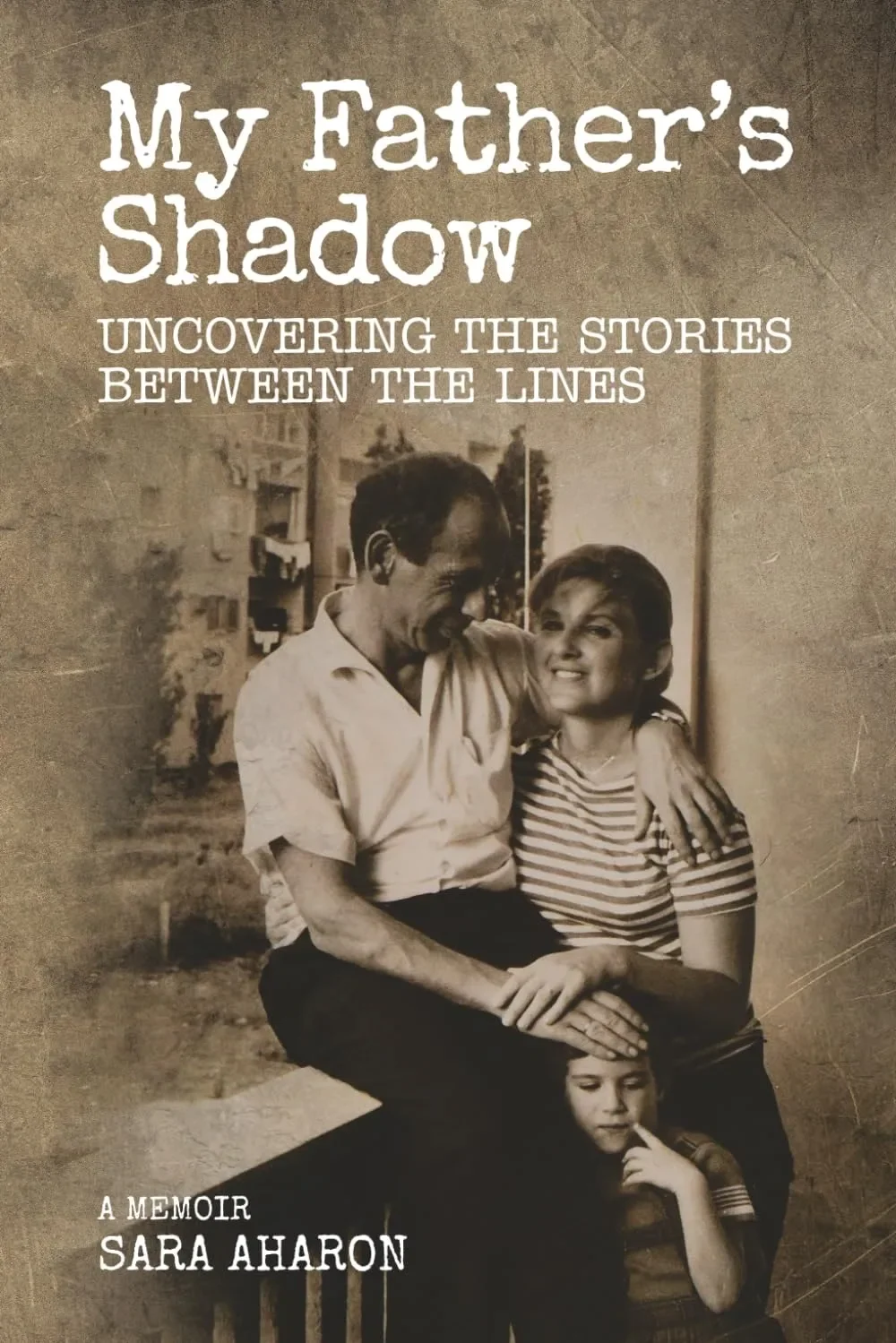
“Someone I loved once gave me a box full of darkness.” This haunting epigraph begins author and psychologist Sara Aharon’s My Father’s Shadow: Uncovering the Stories Between the Lines, in which she attempts to understand her father and the complex events that shaped her turbulent childhood. At its core, the book is an exploration of how we reconcile the people we love with the truths we uncover about them. A Holocaust survivor and renowned journalist, Aharon’s father exposed organized crime and corruption, delving deep into Israel’s darkest places. As a child, growing up in and around Tel Aviv in the 1960s and ’70s, Aharon had no understanding of these things, nor was she aware of how dangerous his job was. She’d heard of him as a hero, as courageous and noble, and she believed it. As she grew older, though, and secrets were exposed, multiple other versions of her father emerged—selfish, careless, deceitful versions. Many of us have experienced a moment when the illusion of a loved one is shattered; how do we come to terms with the realization that they are flawed, complicated, or broken? That what they’ve given us is a box full of darkness? Aharon’s memoir expertly captures the disorienting moment when a parent shifts from hero to something far more human—and far more difficult to understand. Told in two parts, My Father’s Shadow contains a before and an after. In the before, we see innocence give way to trauma as happy childhood memories shift into recollections of fear, neglect, and loneliness. In the after, we see an attempt to unpack this trauma and heal as Aharon delves into the archives of her father’s life and work to try to understand him. What emerges is not a search for easy answers, but a careful, often painful attempt to piece together a fuller truth. It’s heartbreaking at times, humorous at others, but never over-emotional; especially in the second half, the writing is sparse and frank, a journalist’s writing, but within this, Aharon manages remarkable empathy. She relays the past with the clarity of hindsight, and without the nostalgia or sentimentality that could otherwise muddle her investigation. The result, interestingly, is a more comfortable journey through trauma for the reader, enhanced by the author’s psychological expertise. My Father’s Shadow is a nuanced, page-turning read, a rich account of Israel at a turbulent time in its history, and a heartfelt, courageous journey through the past. To the very end, Aharon remains open, both to what her father’s work might teach her about him, and to forgiveness, a reminder that just a little more knowledge can lead to much greater understanding. —CANREADS BOOK REVIEW Published by Sonderho Press www.myfathersshadow.com