
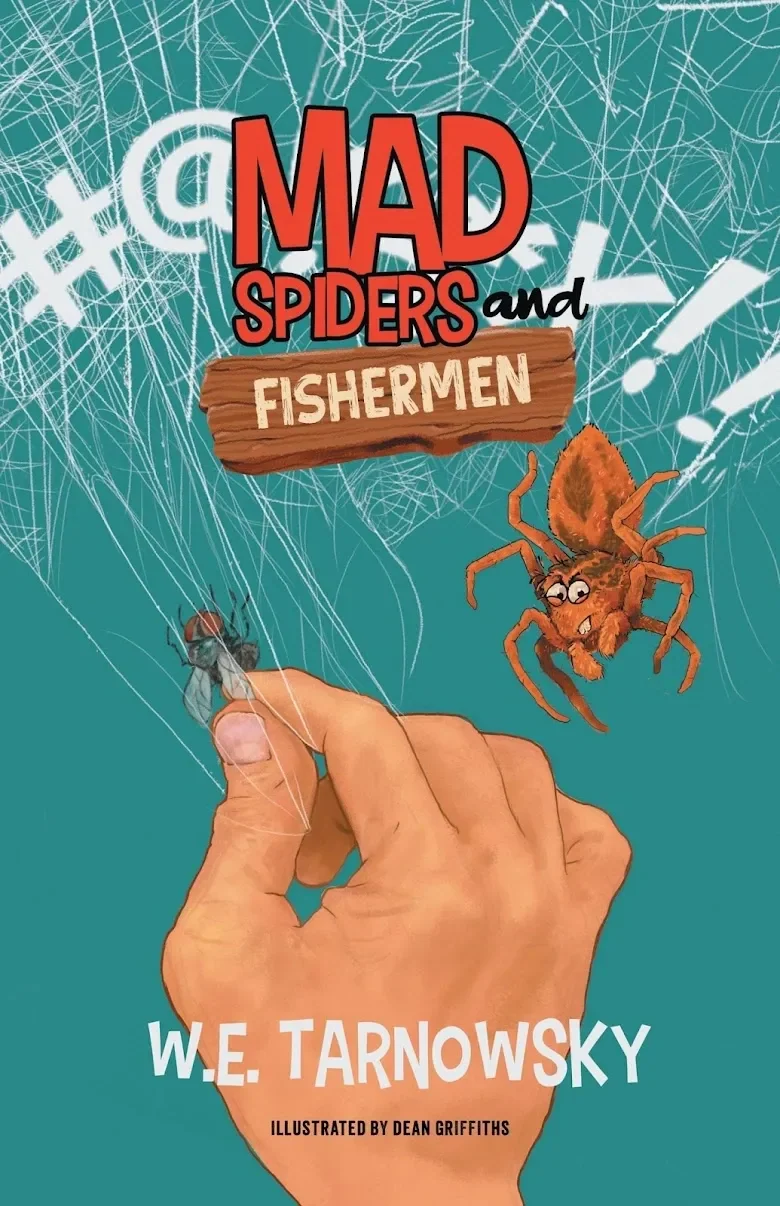
Even if you’re wary of spiders in real life, you can’t help but root for them here. In Walter Tarnowsky’s Mad Spiders and Fishermen, Booker is a hard-working spider living with his wife, Silken, and their five children inside an abandoned Ontario fishing cabin that has been transformed into a thriving spider community. Complete with zip lines, schools, marketplaces, playgrounds, and tightly woven neighbourhoods, the cabin has become a safe haven for generations of spiders. But when the human owners suddenly return and begin sweeping away the community, the enraged spiders must figure out how to survive with what little is left. At least, until Booker can win back the cabin for them. When mad spiders and fishermen face off, who will be the last one standing? Inventive, immersive, and unlike anything else in the animal fantasy genre, Mad Spiders and Fishermen transforms ordinary spiders into unforgettable protagonists. Where many stories simply assign human characteristics to their creatures, Tarnowsky goes a step further by weaving real spider biology, movement, and engineering directly into the plot, creating a world that feels both imaginative and remarkably authentic. Many normally ignore, fear, or kill spiders in real life, but Tarnowsky fosters a surprisingly strong emotional connection to these eight-legged creatures, making the eventual bridge between spiders and humans in the story both grounded and fulfilling. Funny, heartfelt, and impressively detailed, this is a story with real emotional sincerity beneath its webs. Without a doubt, Tarnowsky’s greatest strength is his ability to craft distinct settings; he takes the seemingly mundane and breathes new life into it. The abandoned fishing cabin evolves into something much larger than a setting—it becomes an entire civilization layered with history, traditions, humour, and social hierarchy. The result is a setting so immersive and sensory that readers are easily pulled deep into the story. With a dual-narrative structure that blends both spider and human perspectives, the plot is engaging and conceptually strong. The intersection of the two worlds creates a unique story arc that is highly bingeable. However, where the perspectives of the spiders shine, some of the human counterparts could use more polish. The human fishermen’s discourse occasionally comes across more mechanical, sometimes lacking the wit and emotional nuance present in the arachnid exchanges. Still, the originality of the premise and the strength of the worldbuilding more than compensate. With its light-hearted humour, imaginative conflicts, and heartfelt themes of coexistence and understanding, Mad Spiders and Fishermen is a treat for middle grade audiences. Readers who loved the emotional sincerity of E. B. White’s Charlotte’s Web or the immersive animal societies of Richard Adams’s Watership Down will find plenty to enjoy here. Beneath the webs, the comedy, and the adventure, Tarnowsky reveals the importance of bridging divides, regardless of how vast they may be. This is a wildly creative tale that makes readers care deeply about creatures they’d normally brush away. —CANREADS BOOK REVIEW Published with FriesenPress