
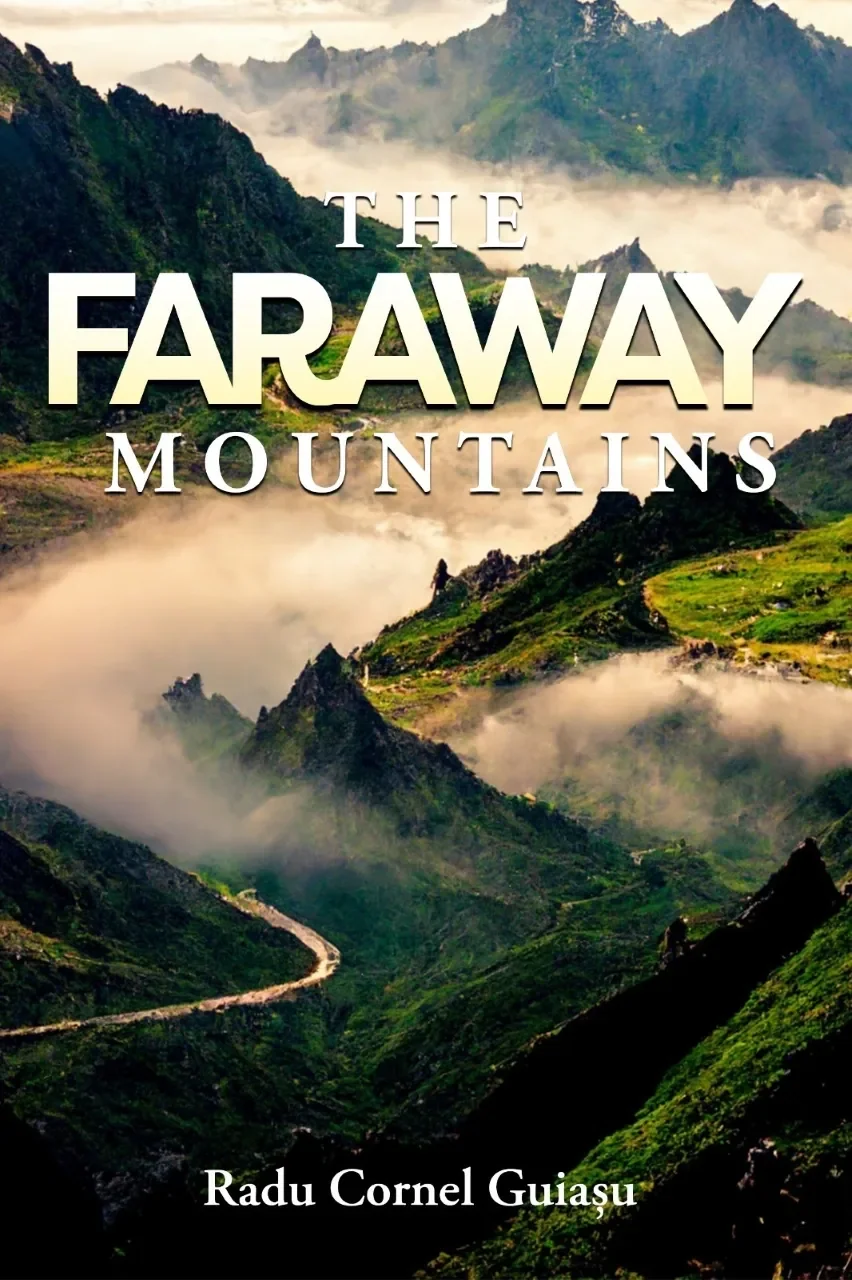
Set against the backdrop of communist-era Romania, Radu Guiaşu’s The Faraway Mountains captures the uneasy tension of growing up in a world where control is an illusion. In the 1980s, four childhood friends—Alex, Gabriel, Dan, and Victor—find themselves on the brink of adulthood, trying to find their footing while living under a stifling dictatorship. It’s a story that drops readers directly into Eastern Europe at a moment of quiet unrest, where ordinary life is shaped by fear, restriction, and the promise of change. The group feels most at home in their country’s beautiful mountainous landscapes, where breathtaking views offer a fleeting sense of freedom. Away from the watchful presence of the secret police who’ve been in the background of their entire lives, these moments also provide a rare opportunity to speak openly. The novel moves between past and present, revealing fragments of their youth—rigid schooling, small-minded authority figures, and forced child labour—alongside glimpses of harsher urban realities, a life in the city brimming with feral dogs and men who work for “Il Presidente.” Here, “home” becomes something complicated: a place of both belonging and quiet resistance, where nostalgia is tangled with the uneasy realization that it was never quite safe to begin with. When they suddenly lose one of the members of their group, the three remaining friends head out for one last adventure in their mountains. But like the very country they are in, there is danger lurking around almost every corner: bears, caves, snakes, dangerous cliffs, and treacherous hole-in-the-wall restaurants with unfriendly staff. It feels as though they are being hunted, by both the wilderness and the system they are trying to escape. Will they make it out alive? Guiaşu’s careful writing balances this tension with both deep observations of nature and moments of humour, creating an immersive atmosphere that places readers directly alongside the characters. At times, however, the character work could benefit from further distinction and development. The four central male figures occasionally blur together, and their dialogue can read as slightly unnatural, which makes it more difficult to fully connect with them as individuals. While the novel introduces compelling emotional stakes, expanding on each character’s perspective and deepening their interpersonal dynamics would strengthen that connection. The shifts between past and present, while effective in concept, can occasionally feel abrupt, and smoother transitions would help maintain narrative cohesion and clarity. Even so, the novel’s accessibility and clarity make it an easy and engaging read, particularly for those interested in this period of Eastern European history. It offers insight into a world many readers may not be familiar with, while still grounding its themes in universal experiences of fear, hope, and uncertainty. Like the lives it portrays, the story resists tidy conclusions, leaving readers with the sense that the journey is far from over. At its heart, this is a novel about coming of age in a world that runs on fear—without losing your head. The pacing of the adventure is strong, carrying the story forward with a steady sense of urgency. The descriptive language is particularly exceptional, grounding readers in the landscape and making the setting feel immediate and tangible. For readers drawn to adventure-driven historical fiction, Guiaşu’s The Faraway Mountains is a truly atmospheric read. Even for those far removed from life under a dictatorship, the novel possesses an emotional core—fear threaded with hope—that feels unmistakably real, making it both gripping and quietly affecting. —CANREADS BOOK REVIEW Published by Histria Books www.raduguiasu.com Instagram: @raduguiasu