
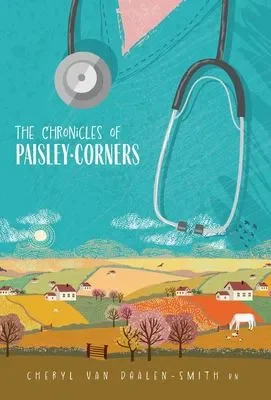
A love letter to the often-unseen work of nurses and the intricacies of community, Cheryl van Daalen-Smith delivers quiet power with lasting emotional resonance in her debut novel, The Chronicles of Paisley ∙ Corners. When Kick Cavendish arrives in the small town of Paisley ∙ Corners, she has no idea what’s going to happen next. A public health nurse, Kick has long dreamed of working in a rural area, of making a difference in her community and building real relationships with her patients. Accepting a job in Paisley ∙ Corners is her chance to finally do it. With a dot in its name, one streetlight, and three and a half corners in the centre of town, Paisley ∙ Corners is all local history, rolling farmland, shops with punny names, and relationships that go back decades. Already resistant to change, will the town accept Kick and her progressive approach to public health? A slim, affecting novel, The Chronicles of Paisley ∙ Corners offers readers a valuable glimpse into the world of nursing. In the opening sentences, we are told that “Public health nurses are like the wind. While rarely seen, their presence is felt.” Kick acts as a gentle breeze, appearing and disappearing as the narrative zooms in and out of the storied lives of a vivid cast of characters. The result is a nuanced depiction of small-town life. We meet an insufferable busybody, an unsatisfied feed store worker, an elderly woman slipping into dementia, a compassionate, retired nurse, a town “hobo,” and many others. Some are unlikeable, and not all like each other; Paisley ∙ Corners is charming, yes, but lives also tangle together and come apart here, old hurts and resentments linger, and viewpoints clash. Van Daalen-Smith excels at crafting characters with emotional depth and believable contradictions, and this excellent characterization is a keen parallel to a nurse’s ethos: always look beyond that first glance to see a whole person. The author approaches each character with empathy, whether they display small-mindedness or an incredibly big, open heart. This is not a conventional narrative—think less plot-driven and more a patchwork of human experience. Though Kick is positioned as the central figure, she remains somewhat elusive on the page—less the protagonist and more the thread connecting disparate stories. The novel’s episodic structure, while intentional, may leave some readers longing for resolution in some instances. At times, the book reads like a memoir; at others, a training guide for nurses; and still others, a gentle work of fiction. These shifting modes, however, mirror the fluidity of real community care, where boundaries blur and roles evolve. Although light on plot, The Chronicles of Paisley ∙ Corners is an achingly human story, brought to brilliant life with intentional, vibrant prose. Urging us to look more closely at the individuals in front of us, it is, ultimately, a meditation on caring for each other, sometimes despite the complicated contents of our flawed human hearts. For the reader who wants a warm, quiet, character-driven story that inspires. —CANREADS BOOK REVIEW