
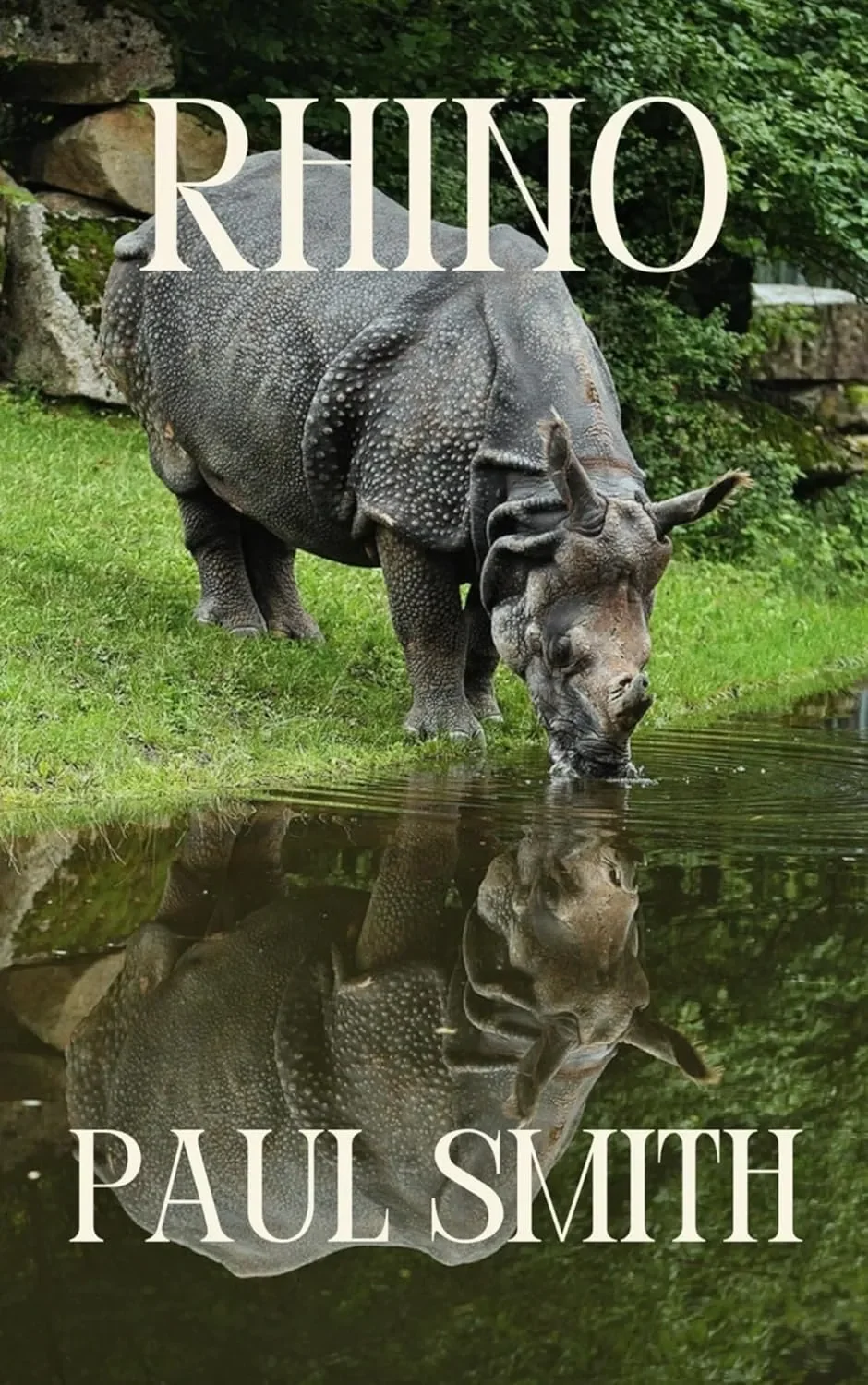
Echoing the passionate advocacy of South African conservationist Lawrence Anthony, whose fight to protect elephants and rhinos from poachers became legendary, Paul Smith channels that same spirit of urgency and empathy in his latest novel, Rhino. Once again, Smith’s love for animals is unmistakable—woven through every page with the age-old question that haunts both his characters and his readers: How far would we go to protect and save our loved ones? That question soon fractures into darker “what ifs.” What if, in exchange for the life of a cherished parent, sibling, or friend, we have to let go of everything we hold dear? It is into this dark night of the soul that Smith immerses us, grabbing our hand and leading us full-tilt into Hanoi’s chaotic tapestry of sights and smells—its “street vendors in conical hats,” its “calls mixing with the constant symphony of motorbike horns and bicycle bells.” The city becomes a living, breathing backdrop to a gripping story about sacrifice, survival, and moral reckoning. Readers first meet Dr. Minh Tran, a 55-year-old oncologist whose career and life is dedicated to fighting cancer with modern medicine. His obsession, however, lures him into the dangerously dark depths of the black market, where he becomes a prime target for those seeking to profit from the forbidden “cures” derived from rhino horns. The belief that these horns possess miraculous healing powers is, of course, unfounded—yet, as Smith notes, “on the black market, a single kilogram of rhino horn can fetch up to $60,000—more valuable than gold, platinum, or even cocaine.” Tran’s daughter, Linh, a 28-year-old research scientist, is both the novel’s moral compass and emotional core. She embodies the ballsy (if sometimes naïve) hero that we all aspire to be. Torn between saving her father and preserving the lives of the endangered rhinos, she embodies a new generation’s struggle with ethics and empathy. Her courage feels heartbreakingly human, making her one of Smith’s most compelling and relatable protagonists. Smith’s underworld is visceral and unrelenting, where “mercy has no place.” Bad guys and vile situations seize the reader’s attention like a four-car pileup on the 401—horrifying, yet impossible to look away from. Ghastly moments, such as the discovery of a severed finger beside the mutilated body of a rhino, pull readers deeper into the chaos. Swollen with rot yet still wearing a silver ring, said finger is an image that lurks in the memory, like a whisper waiting to be beckoned forth. Smith’s depiction of Hanoi’s criminal underbelly is equally cinematic and suffocating, populated by ruthless figures like Khanh Pham—a villain as magnetic as he is monstrous—and his brutal enforcer, Hanh. The result is a thriller drenched in deceit and betrayal: corrupt police ranks, a kidnapped friend, tumultuous chases through Hanoi’s seedy alleyways, Linh’s desperate moral compromises, and plot twists that breathe intrigue into every page. While Rhino’s story rarely loses momentum, the prose occasionally leans on heavy metaphors, and the dialogue would benefit from a sharper edit. Some grammatical inconsistencies and language choices also affect readability in places—but these are mechanical flaws in an otherwise gripping work of moral suspense. Smith’s latest work remains a thrilling, morally complex, and action-packed novel—part crime thriller, part ecological call to arms. With its emotional urgency and unflinching look at human greed, Rhino will captivate readers who crave adventure with meaning. Beneath the grit and violence lies a deeply empathetic plea: to protect what remains before it’s too late. Smith’s enduring reverence for rhinos resonates long after the last page, awakening in readers a sincere and empathetic awareness of the fragile beauty we risk losing forever. —CANREADS BOOK REVIEW